

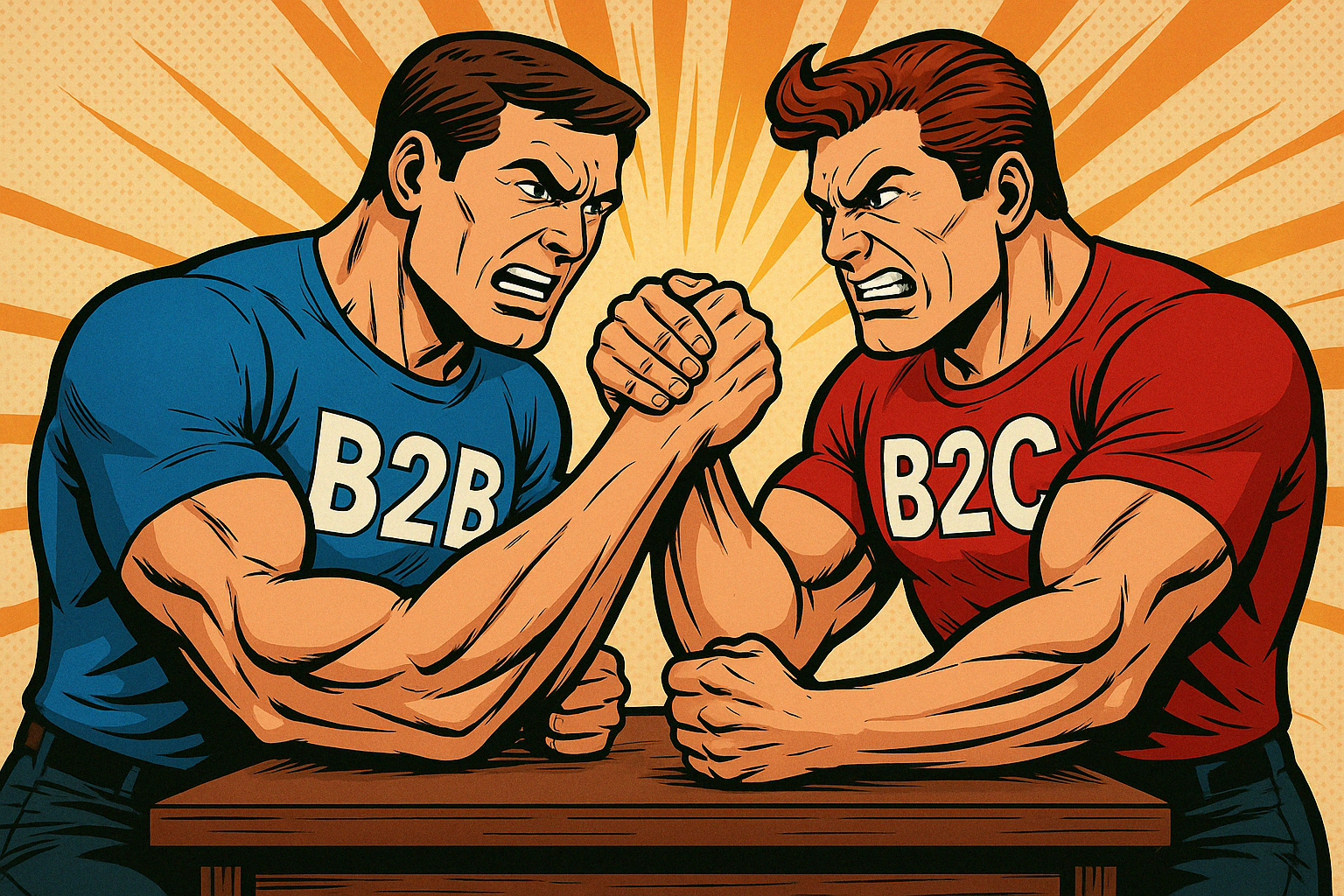
I spent far too long on this one. After NAB Show 2025 I went down a rabbit hole, because the show left me with a question I could not shake: how much of what consumer media tech has learned about selling software could the broadcast side use?
SaaS was the buzz of the show, and the people I spoke to across several of the halls were mostly running a generic SaaS playbook without asking whether it fitted the way broadcasters and production companies buy. Others had the opposite problem. They had not noticed that selling software as a service is a different go-to-market from selling a hardware chassis or a perpetual licence. Both groups can learn something from Canva and Adobe, and from some of the start-ups too.
What the two sides share
Both sides sell better when the people behind the product visibly know the work. Frame.io is the example I keep coming back to. Adobe’s announcement says video creators Emery Wells and John Traver conceived and designed it in 2015, and that it had more than a million users across media and entertainment companies, agencies and global brands. Adobe put the price at $1.275 billion. I think a founding story told by people who had lived the problem helped it reach that many people.
On the B2B side content proves fit; on the consumer side it proves ease. Blackbird sells cloud-native editing to media companies, and its site leans on customer case studies such as the Buffalo Bills and CBS19 News, which show it working for people like the reader. Descript sells with a single sentence on its home page: you edit video by editing text.
Where they part company
The buying process
Selling to a broadcaster means answering at least three groups of people, and they do not ask the same questions:
- Technical teams want to know about integration and what it does to the workflow.
- Operations leaders want to know about training and the risk of the transition.
- Finance wants the ROI, the total cost of ownership and how flexible the contract is.
Write each group’s questions down before the demo and build the follow-up around them. A demo that satisfies the engineer and leaves finance guessing has not moved the deal.
A consumer tool has minutes. Canva’s free plan puts a library of more than 1.6 million templates in front of a new user, which I read as a way of getting people to a finished result before they lose interest.
Product-led growth
Pure self-service is hard to make work in broadcast. The systems connect to existing infrastructure such as MAM, playout and automation, so adoption without help is difficult, and a failure means dead air or a missed deadline, so nobody wants to implement alone. Most media operations also have workflow needs of their own that benefit from a conversation.
That does not mean dropping the idea. A guided version keeps demos and trials at the centre, with a solutions engineer making sure setup and integration go properly.
Consumer products do this without the engineer. Epidemic Sound sells royalty-free music and sound effects by subscription. Descript has a free plan. Kapwing lets anyone export for free, with its watermark on the result, and the paid plans take the watermark off. The product is the sales team, which means the interface has to need little explanation, guidance has to appear in context, and the user has to get something working fast. One suggestion of mine: ask for the upgrade just after someone finishes a project, when they feel good about the tool, and not when they hit a limit.
The channel
Resellers, integrators and consultants who already hold the customer’s trust can shorten a broadcast vendor’s route to market, if the vendor invests in their training, certification and joint marketing. They matter because decision-makers move between the same handful of companies, go to the same events and rely on the same trusted integrators, so influence counts for more than reach. NAB, IBC and the regional shows still generate pipeline. And technical partnerships make a complete solution, for example a cloud transcoding product that works with storage, MAM and delivery platforms.
A consumer funnel can afford paid acquisition because the volume is high, which a broadcast vendor selling to a handful of named accounts cannot. Some consumer products spread by design: every Kapwing export that carries the watermark advertises Kapwing. A B2B vendor counts its customers by name. A consumer product counts them in thousands or millions, through funnels that run largely without people.
Pricing
In B2B broadcast, pricing is rarely published and almost always negotiated. It scales with channels, hours of content, concurrent users or infrastructure, and the buyer’s view of the value depends on which workflow is being changed. The pricing that holds up ties cost to something the buyer can measure: production time saved, content throughput or infrastructure cost. That needs an ROI model the buyer can pick up and use to make their own case to finance.
Consumer pricing is on the page. Canva’s pricing page lists a free plan with one brand kit, against five brand kits and AI tools such as resize and background removal on Pro. The free tier brings people in and the paid tiers hold the features that fix a specific irritation.
What B2B can borrow
Find the most impressive thing the product does and make sure a new user meets it in their first few interactions.
Put retention ahead of acquisition. A subscription can be cancelled far more easily than a hardware purchase can be returned, so the product has to hold people before you spend heavily on finding more of them. It does not come naturally to B2B companies and it has to be done anyway.
Give users somewhere to share tips, show their work and help each other. I expect that to help retention, and I have no number to offer for it.
At the weekend we are the target of B2C selling, and most of us have got to like how it is done. The companion piece, Two Media Tech SaaS Go-to-Market Stories, looks at two B2B companies doing it their own way.